Hello

Gioel Antoni

@dodgel · Software developer

Based in Italy. Remote by default.

Your product is live.
The list of fixes keeps growing.

I build and fix web and mobile apps for startups and small SaaS teams.

scroll

I'm Gioel, a developer based in the Grosseto area, in Tuscany.

I taught myself by building my own apps. The latest is EchoFrame. Since 2026 I've worked remotely on Flinky AI, a SaaS in production.

When a product is live, there is always something to do. Bugs to fix, small features to ship, integrations to connect.

I take care of that when hiring someone just for it would be too much. You give me a clear problem, I read the code, and I move it forward.

If something specific needs fixing, get in touch and we can see if I can take it on.

What I can take off your hands.

  • Development

    I add features to products that are already live, or build mobile apps from scratch. For mobile I use React Native and Expo; for web, React and TypeScript.

  • Integrations & APIs

    I connect your product to the services you already use: payments, auth, webhooks, CRM, push notifications.

  • Fixes & performance

    Bugs nobody has had time to look at, slow screens, production crashes. I get into the code, find the cause, and fix the problem.

  • Ongoing support

    Development hours every month. It starts at eight and goes up to a twenty-hour week. You get technical help on the product without hiring for a full role.

A whole app, built on my own.

EchoFrame

Own app · Android beta · since 2026

Leave a memory where it happened. An echo is a photo left in the real world. It waits where it was taken until someone stands in the same place and finds it.

The map shows that an echo is nearby and how far you are from it. It only opens once you are actually there.

I designed and built it myself: app, database, website, legal pages.
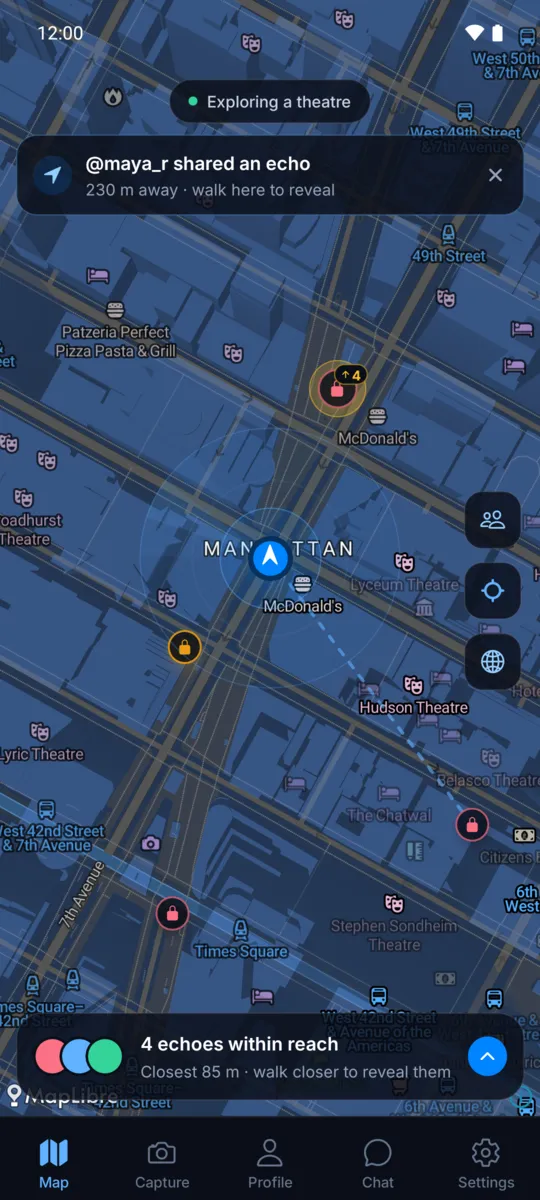
  • EchoFrame's map in Times Square: a friend left an echo 230 metres away, and it only opens once you walk there
    A friend left an echo 230 m away.
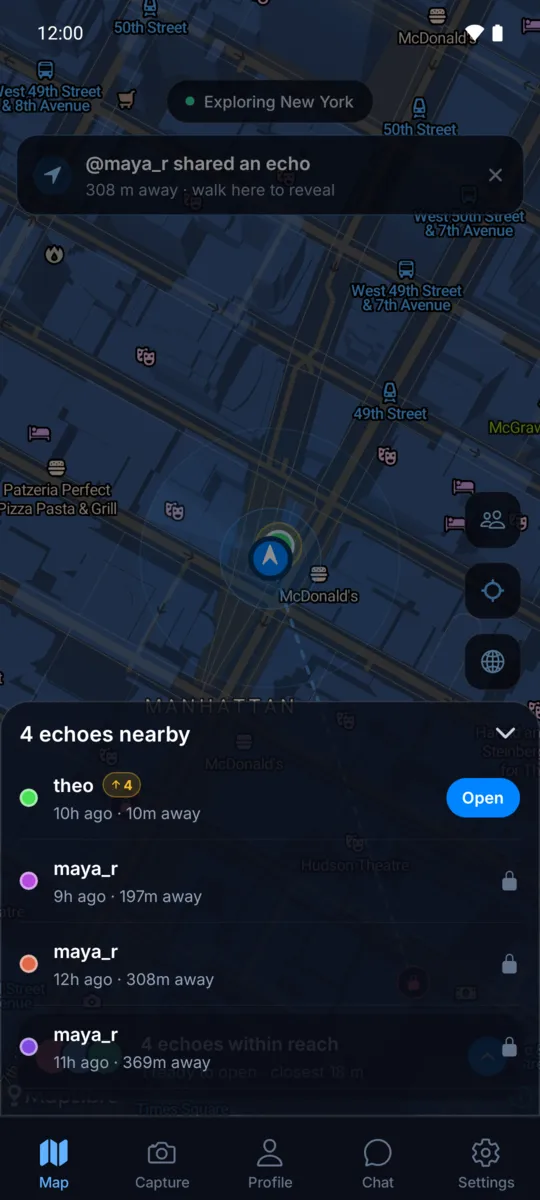
  • The list of nearby echoes: the one 10 metres away can be opened, the other three stay locked with their distance beside them
    The one 10 m away opens. The rest don't.
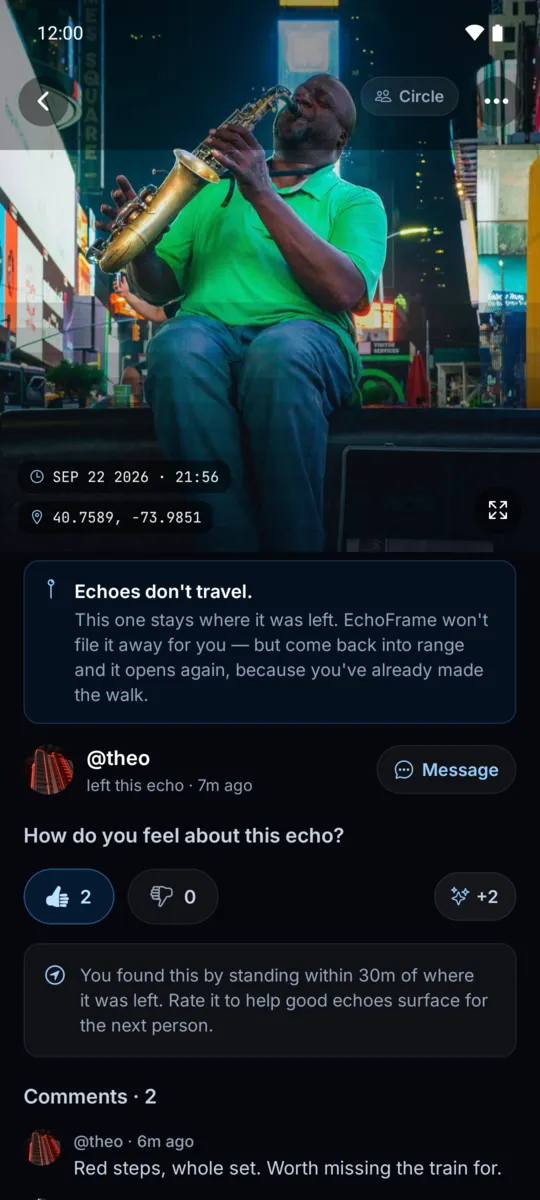
  • An opened echo: a photo of a saxophone player, with the date, time and coordinates of the spot where it was taken
    Once you're there, the photo opens.

Screenshots of the real app, using a test account.

  • React Native
  • Expo
  • TypeScript
  • Supabase
  • PostGIS
  • Row Level Security
How a photo opens
  1. client

    01App asks to open
  2. database

    02Database RPC
  3. 03PostGIS distance check
  4. 04Temporary signed URL

The photo never has a public URL. Permission is decided by the database, not the client.

What's in it

  • React Native app with Expo Router, camera built into the app, MapLibre map and background geofencing
  • Supabase backend: Postgres with PostGIS for proximity queries, Row Level Security as the security boundary, Postgres RPCs for every sensitive operation
  • Photos in private buckets, opened only through temporary signed URLs
  • Push notifications, data export, a moderation queue, and GDPR basics covered: data controller, hosting region, minimum age, signed unsubscribe

Why it's here

The hard part of EchoFrame is not the map. It is keeping a photo private until the person opening it is in the right place. Above is how I handled that.

A live SaaS, for a client abroad.

Flinky AI

Software Developer · since 2026

Flinky handles chat conversations with leads: it answers questions, qualifies them, and books calls. In practice, it does the work of a sales setter.

I work on the live product inside a distributed team, on features, API integrations, database work and debugging. A few examples:

  • I built AI-written follow-ups that don't go out unless the text passes its checks, and the hand-off to a person when Meta's 24-hour window closes.
  • I added the checks that stop the bot from sending the model's internal commands to leads.
  • I made booking stats configurable per calendar. An admin picks which calendars count, and the app recounts past bookings on its own.

I already work remotely with a client abroad and invoice every month. Here I use the same setup: a clear block of hours, month by month, without adding a full role to the team.

  • React
  • TypeScript
  • Convex
  • REST API
  • Postgres
  • LLM

The prices, before we talk.

  • Ongoing support

    from€320/month

    A block of hours every month for bugs, small features, maintenance, and updates. It starts at 8 hours, 16 if you ship often, and goes up to the part-time tier below. Cancel whenever you want.

    Works best if your product is already live and you want continuity without hiring.

  • Standing part-time

    from€2,400/month

    Around 20 hours a week, every month. I sit on the project like a member of the team, in your standups and your review process. No hiring process, no payroll to set up, and it ends on a month's notice.

  • A feature or a project

    from€600

    A new feature, an app from scratch, a part that needs rebuilding. Fixed quote, once we both understand what's actually needed.

  • Single task

    from€180

    A bug, a migration, something that broke. Half a day minimum.

Let's talk

Prices are final: I don't charge VAT under the Italian flat rate scheme.

The first chat to see whether working together makes sense is free and has no commitment.

Tell me what you're building and what's blocking you.

I reply within one working day.

Step 1 of 3

What do you need?

Pick as many as apply.

dodgel status

reply
within 1 working day
first chat
free, no commitment
support
from €320/month, up to part-time
availability
~20 hours a week, open now

now

10:00 to 22:00